

Beyond the Feature List: What Public-Sector Parking Buyers Should Evaluate Now
As parking technology matures, feature lists matter less than architecture. Here's what agencies should really evaluate when choosing their next platform.

Parking technology release notes are getting longer every season. Most of what's in them is useful. Very little of it is new. As the market matures, the capabilities that once set vendors apart, for example, dashboards, exception flagging, basic reporting, are becoming baseline expectations, not differentiators. That shift changes what agencies should be evaluating, and it is where many procurement processes are still behind.
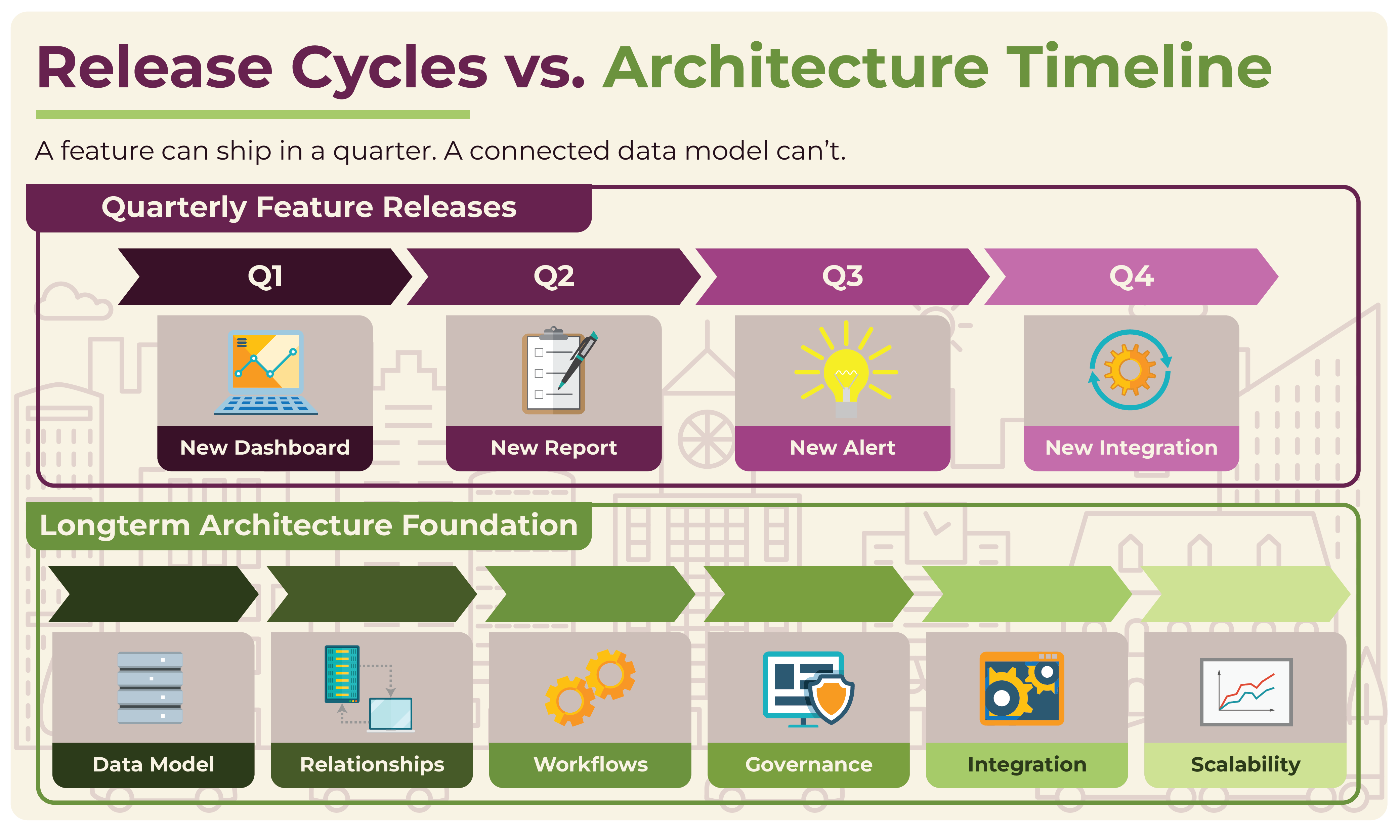 Any vendor can announce a new dashboard or a new integration. That's a release cycle, not a structural advantage. What can't be announced into existence is a system where permit decisions, enforcement actions, citations, and collections outcomes are connected by design, because that needs to be built into the data architecture from the start, not retrofitted once the gaps become visible.
That's the real distinction agencies should be evaluating for, and it's also the one that's hardest to assess from a changelog. A feature list tells you what a system does today. It doesn't tell you whether the underlying architecture was built to stay connected as the agency's needs grow, or whether each new capability is another piece bolted on to a system that was never designed to hold them together.
Most operational cost in parking organizations doesn't come from a missing feature. It comes from disparate systems that were never designed to share information, so staff spend their time reconciling instead of operating. Agencies evaluating a renewal or a switch should weigh that architectural question as heavily as any feature comparison, because it's the one that determines whether this problem gets solved or just moves.
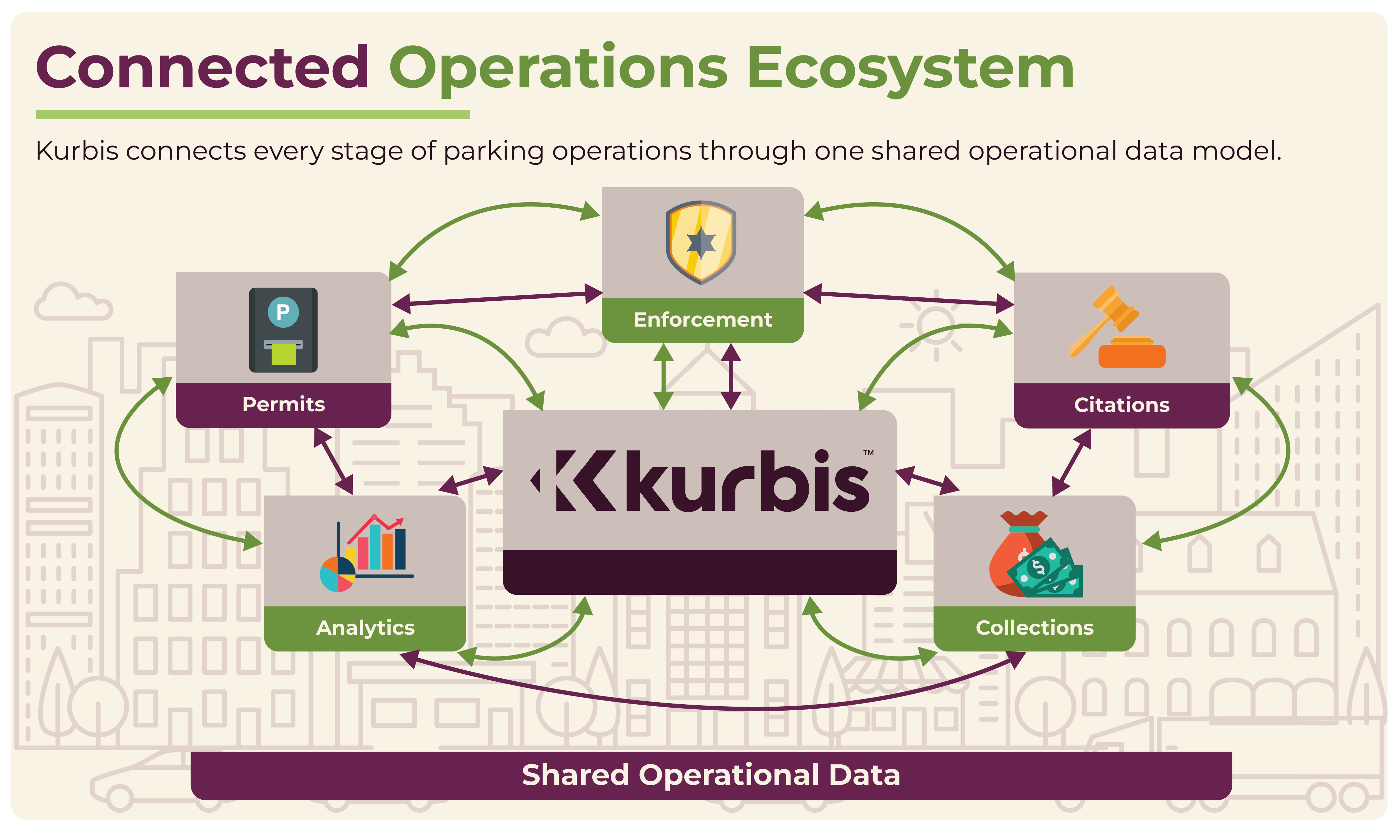
Kurbis was built around the idea that parking operations work best when the systems supporting them aren't treated as separate functions. Permits, enforcement, citations, collections, and analytics are all part of the same operational picture: actions in one area create downstream impacts in another, so agencies need a platform that reflects those relationships rather than forcing staff to piece them together manually.
That's why Kurbis is built as a single ecosystem rather than a collection of standalone applications, a design decision made at the outset, not a later addition. The goal is to provide a clearer view of operations, reduce administrative effort, and help teams act on information more quickly and confidently.
For agencies evaluating technology investments, that distinction matters. Features can be added over time, but the way a platform is designed ultimately determines how effectively new capabilities work together as operational requirements evolve.
Before comparing feature lists, agencies should ask vendors a more useful question: was this capability designed into the architecture from day one, or added to catch up with what the market now expects.
The answer changes what an agency can expect from that vendor's next three years of releases, not just this one. The real test isn't how a platform performs during a demonstration. It's how well it supports the organization as requirements evolve.
Read the newest updates and insights from our team.
As parking technology matures, feature lists matter less than architecture. Here's what agencies should really evaluate when choosing their next platform.

As AI adoption grows across the parking industry, Gaurav Khanna from Trellint explores why success depends on building an AI-ready organization.

Discover key takeaways from Trellint's IPMI Virtual Learning Lab, where David Strathy-Miller and Sean Mackin discuss open ecosystems, modernization, and future-ready parking technology.

Evaluate parking citation collections bids with confidence. A practical guide to RFP requirements, vendor accountability, performance oversight, and revenue recovery.
Discover how predictive modeling, forecasting, and independent analysis help cities improve parking collections performance and revenue outcomes.

Discover how to manage a flexible, integrated ecosystem that delivers safer streets, better mobility, and long-term value.
Have a question or request? Let us know and we’ll follow up shortly.