

Beyond the Feature List: What Public-Sector Parking Buyers Should Evaluate Now
As parking technology matures, feature lists matter less than architecture. Here's what agencies should really evaluate when choosing their next platform.
For years, technology modernization in parking followed a familiar playbook.
When organizations needed new capabilities or aging systems reached their limits, the assumption was often that a complete replacement was inevitable. New enforcement technology meant replacing enforcement systems. New payment capabilities meant overhauling payment platforms. New reporting requirements often triggered broader technology reviews.
That approach worked when technology evolved slowly.
Today, it is becoming harder to justify.
Parking organizations are operating in an environment where new technologies, changing customer expectations, curbside pressures, AI innovation, and evolving mobility programs are creating constant change. The challenge is no longer simply modernizing. It is modernizing in a way that allows agencies to keep adapting long after implementation is complete.
That was a key theme explored during Trellint's recent IPMI Virtual Learning Lab, Beyond Rip-and-Replace: The Shift Toward Open Parking Ecosystems, hosted by David Strathy-Miller, Head of Product Management, and Sean Mackin, Head of Customer Care. Drawing on real-world examples and industry experience, the discussion highlighted why many agencies are moving away from large-scale technology replacement strategies and toward more connected, flexible operating models.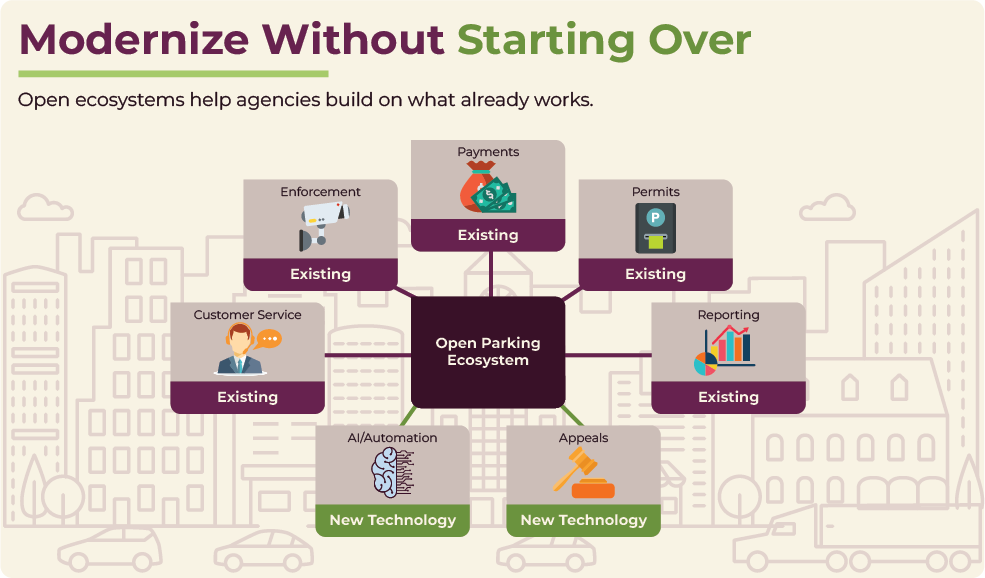
Traditionally, modernization discussions focused on replacement.
What system should be replaced? Which platform should come next? How quickly can legacy technology be retired?
Increasingly, organizations are asking a different question.
“Instead of asking, 'What do we need to replace?' they're asking, 'What can we improve on while keeping the items that already work well?’”, explained Sean Mackin, Head of Customer Care at Trellint
This shift is being driven by a simple reality. Parking operations are interconnected. Enforcement, payments, appeals, permitting, collections, reporting, customer service, and compliance all influence one another. Replacing a single component often has wider operational implications than anticipated.
At the same time, agencies are under pressure to introduce new capabilities faster than ever before.
Automated enforcement. AI-powered workflows. Digital permitting. Enhanced customer self-service. Better data visibility. These innovations cannot always wait for the next major procurement cycle.
Organizations need a modernization strategy that balances stability with adaptability.
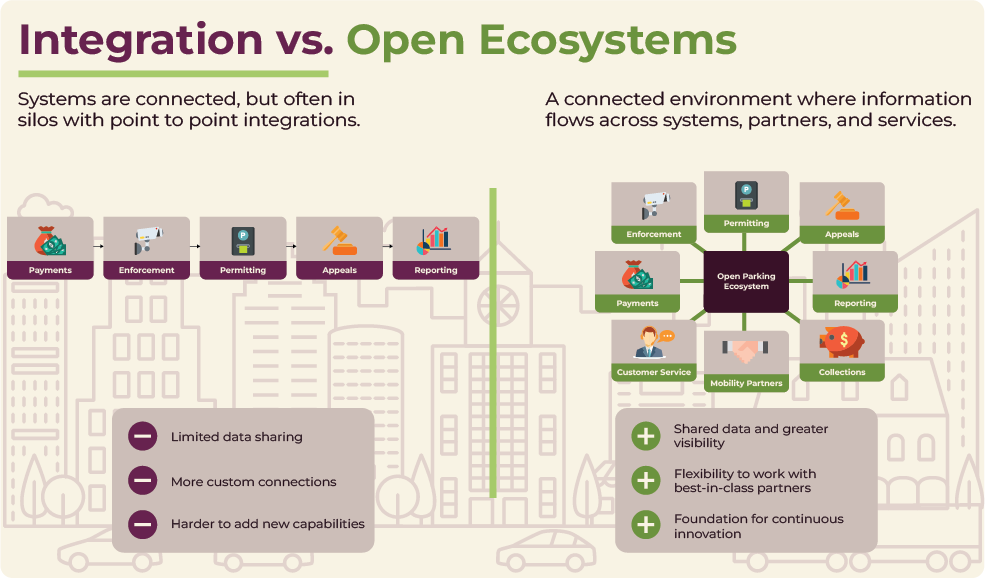
One of the strongest themes emerging across the parking industry is the growing distinction between integration and ecosystem thinking.
Most technology providers can integrate systems. Data can move between platforms. Interfaces can be connected.
However, “Integration alone is not the same as an open ecosystem” David Strathy-Miller noted.
An open ecosystem takes the concept further.
Rather than relying on a single provider to deliver every capability, an ecosystem approach allows organizations to combine specialist technologies, trusted partners, and best-of-breed solutions into a connected operational environment. Information flows between systems, processes become more connected, and agencies gain greater visibility across operations.
The focus shifts from managing individual products to managing outcomes.
For parking leaders, that distinction matters. Future technology needs are becoming harder to predict. What is considered innovative today may become standard tomorrow. An ecosystem approach creates the flexibility to introduce new capabilities without forcing organizations to overhaul their entire technology foundation every few years.
The Learning Lab explored several real-world examples that reflected this change in mindset.
Some organizations continue to pursue large-scale transformation programs, replacing multiple systems simultaneously to achieve a new operating model. These projects can absolutely be successful, but they require significant planning, stakeholder alignment, data validation, training, and change management.
Other agencies are choosing a different path.
Rather than replacing everything at once, they are expanding capabilities through connected technologies. Automated bus lane enforcement programs provide a strong example. In many cases, no single technology provider offers every capability required. Programs often involve AI-enabled camera technology, citation processing platforms, payment services, reporting solutions, customer service workflows, and external partners.
Success depends less on finding a single solution and more on creating an environment where those technologies work together effectively.
This approach enables agencies to introduce new services without disrupting existing operations and provides a framework for future innovation.
Another trend gaining momentum is the use of pilot programs to evaluate innovation before committing to large-scale deployment.
New technologies often generate excitement, but excitement alone does not justify investment.
An ecosystem-based approach supports this experimentation. Because new technologies can be introduced alongside existing systems, agencies can test, measure, refine, and expand based on real performance data rather than assumptions.
In many cases, successful pilots become the foundation for broader transformation initiatives, reducing risk while accelerating innovation.
Technology implementation is often treated as the destination.
In reality, it is the starting point.
The true measure of modernization is not whether a system goes live successfully. It is whether organizations achieve meaningful improvements afterward.
That means looking beyond technical milestones and focusing on outcomes:
The organizations seeing the greatest benefit from modernization initiatives are often those that continue refining processes long after implementation is complete. They invest in change management, monitor performance, and adapt as requirements evolve.
Open ecosystems support this continuous improvement mindset because they enable organizations to add new capabilities over time rather than waiting for another major replacement cycle.
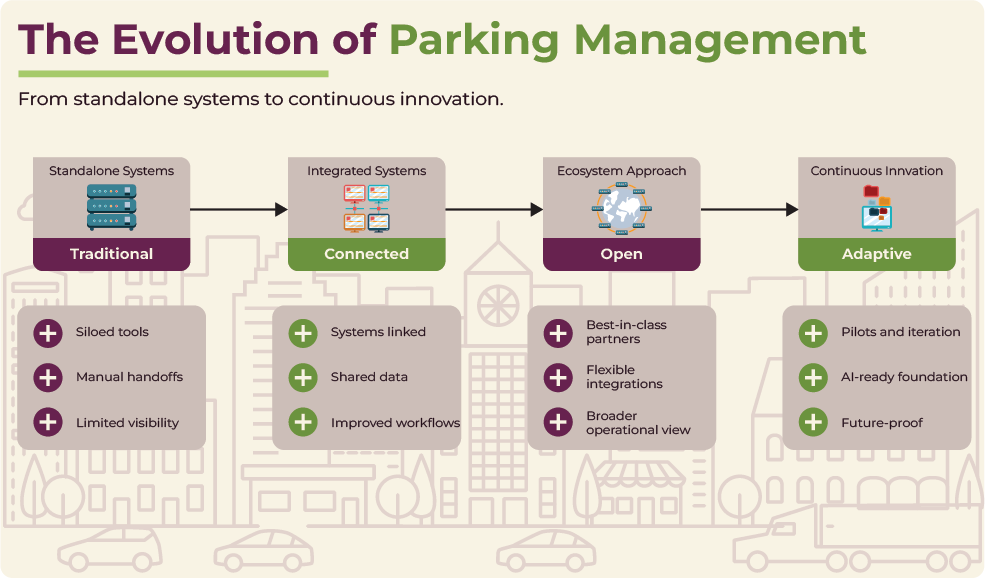
Artificial intelligence is often at the center of modernization discussions today, but AI also highlights a broader challenge.
No one knows exactly which technologies will define parking operations five years from now.
The next breakthrough may come from an AI solution, an enforcement partner, a customer experience platform, or a technology category that does not yet exist.
Future readiness is no longer about predicting the next innovation.
It is about creating a technology foundation capable of accommodating change when it arrives.
That is why the conversation is shifting from platforms to ecosystems.
As David Strathy-Miller noted during the discussion, "The future isn't about finding one system that does everything. It's about creating an ecosystem that can evolve alongside your organization.
The organizations best positioned for the future will not necessarily be those with the largest technology stacks or the most comprehensive single-vendor solutions. They will be the organizations with the flexibility to connect new capabilities, integrate specialist partners, and evolve without disruption.
Modernization does not have to mean starting over.
Increasingly, it means building a connected foundation that allows innovation to happen continuously. And in an industry where change shows no sign of slowing down, that flexibility may prove to be the most valuable capability of all.

Watch the full IPMI Virtual Learning Lab recording to hear David Strathy-Miller and Sean Mackin discuss how open ecosystems are helping parking organizations modernize, integrate emerging technologies, and build greater adaptability for the future.
Read the newest updates and insights from our team.
As parking technology matures, feature lists matter less than architecture. Here's what agencies should really evaluate when choosing their next platform.

As AI adoption grows across the parking industry, Gaurav Khanna from Trellint explores why success depends on building an AI-ready organization.
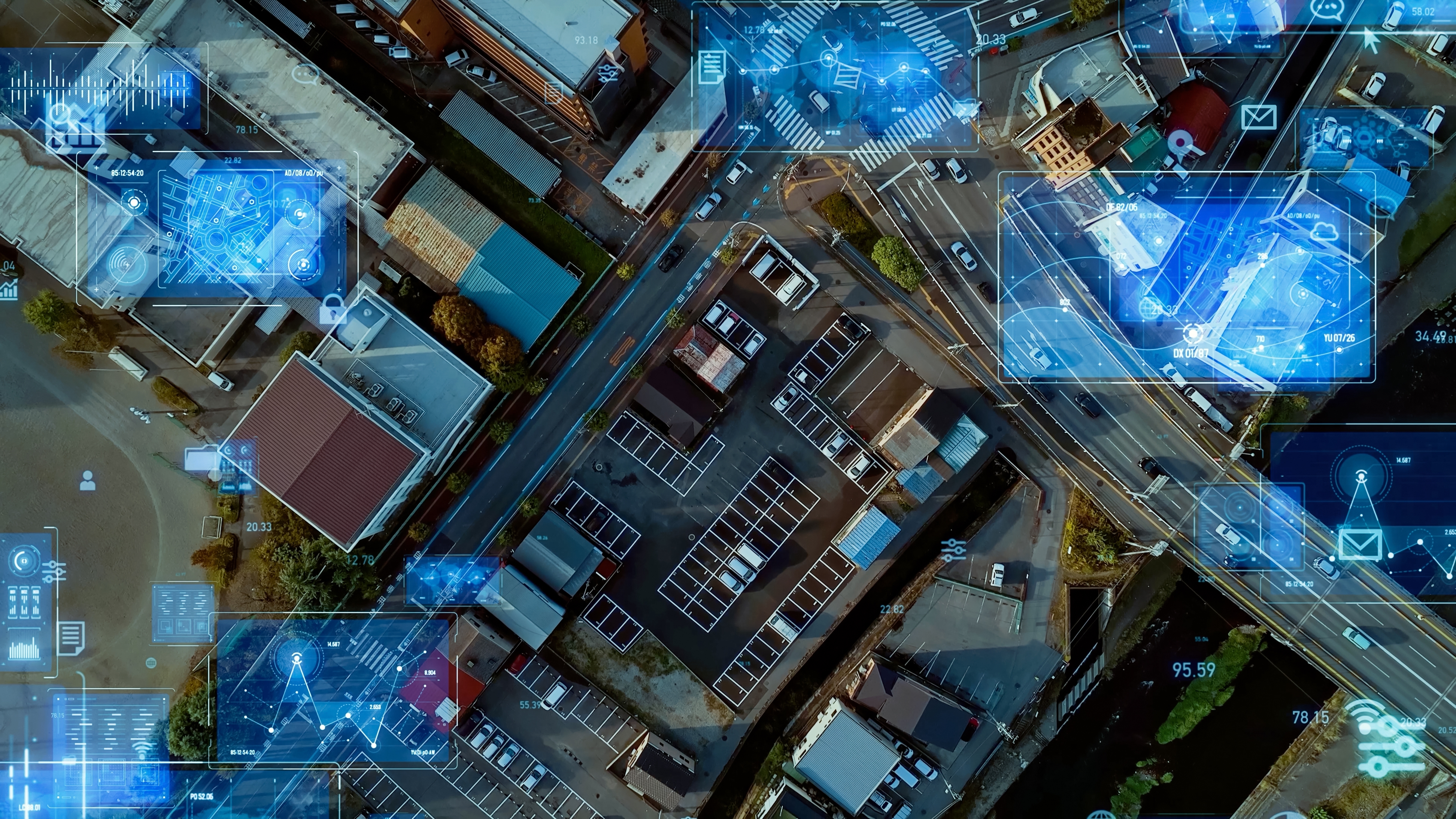
Discover key takeaways from Trellint's IPMI Virtual Learning Lab, where David Strathy-Miller and Sean Mackin discuss open ecosystems, modernization, and future-ready parking technology.

Evaluate parking citation collections bids with confidence. A practical guide to RFP requirements, vendor accountability, performance oversight, and revenue recovery.
Discover how predictive modeling, forecasting, and independent analysis help cities improve parking collections performance and revenue outcomes.
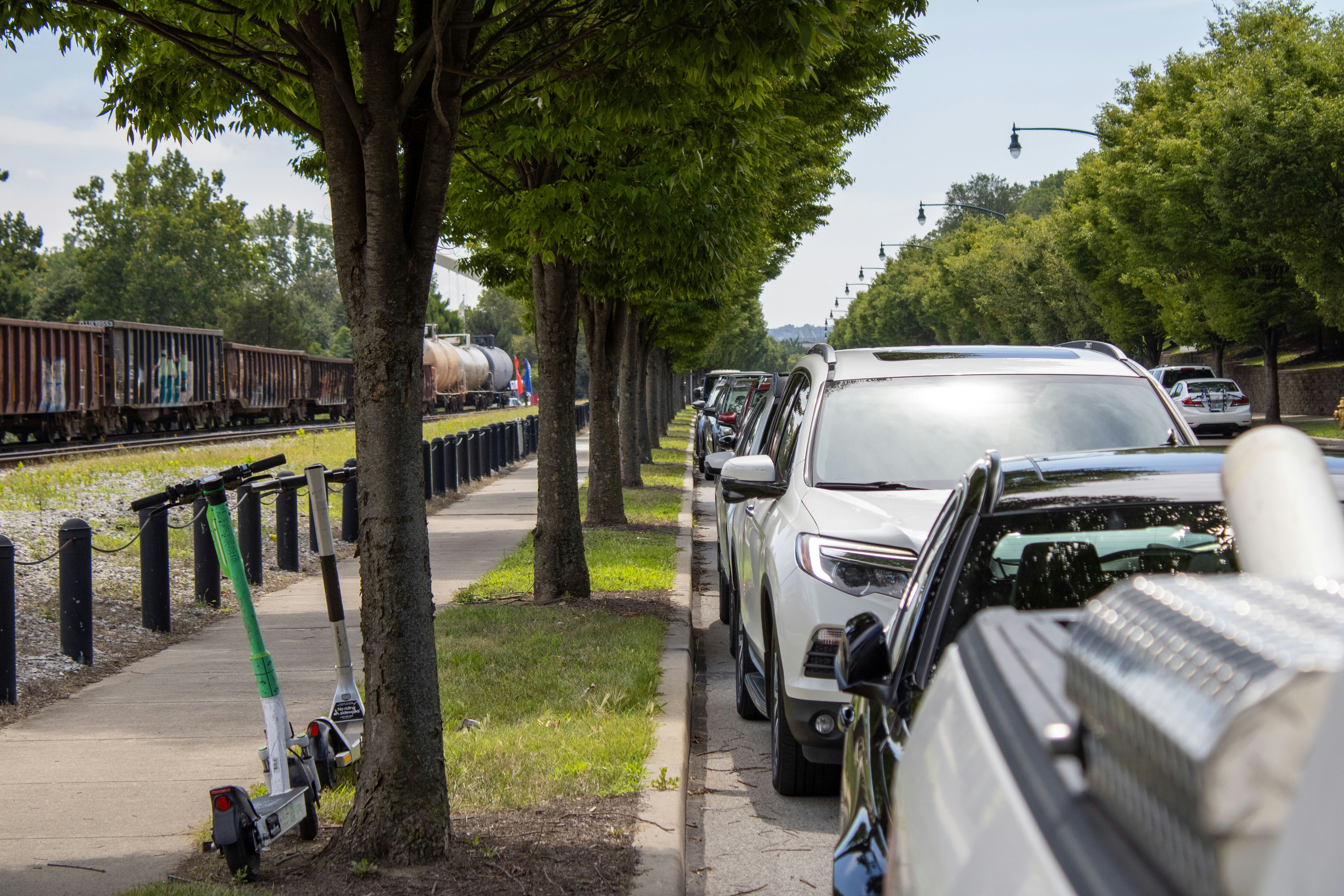
Discover how to manage a flexible, integrated ecosystem that delivers safer streets, better mobility, and long-term value.
Have a question or request? Let us know and we’ll follow up shortly.