2 min read

Cities everywhere are under pressure to modernize parking and curbside systems, often with shrinking budgets and rising public expectations. But real progress rarely comes from buying “more tech". It comes from making current systems work together, work smarter, and work in ways that change real-world behavior. That is where future-proofing begins.
At its core, a future ready parking and curbside strategy aligns people, policy, and technology so that every decision is rooted in outcomes: safety, fairness, compliance, and financial integrity.
Modernization Without Coordination
Cities today are managing a patchwork of systems that were never designed to work together. Enforcement platforms, payment tools, adjudication systems, LPR cameras, mobile apps, and various data sources all contribute pieces of the picture, yet the overall operation often feels disjointed.
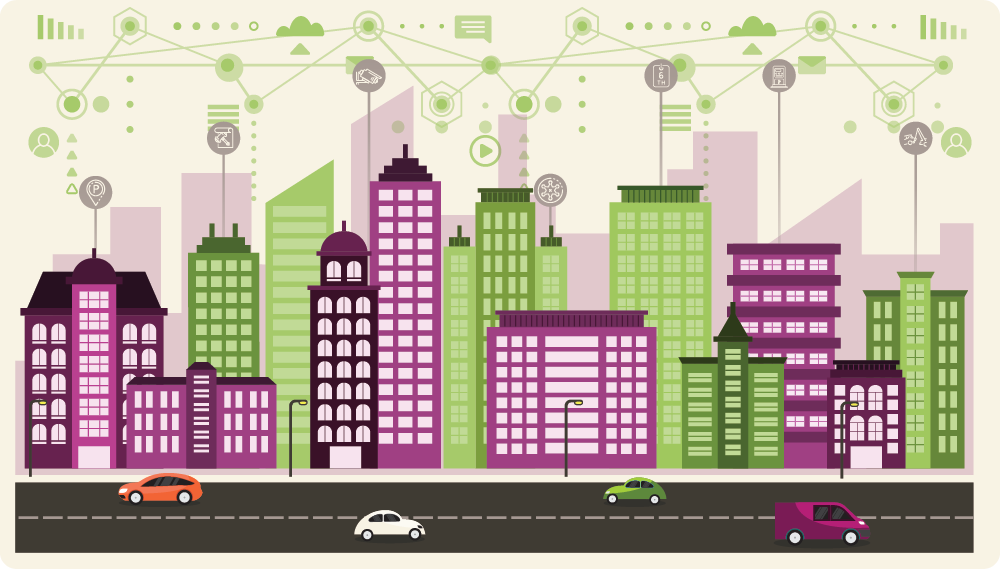
As new technologies emerge such as AI, advanced LPR analytics, and digital curb tools, cities often struggle to turn those capabilities into measurable improvements in turnover, safety, or equitable enforcement. Without governance, modernization becomes a pile of pilots. As a result, revenue leakage grows, compliance becomes inconsistent, and public trust erodes.
Why Future-Proofing Matters
Future‑proofing is not about chasing the next tool or trying to guess which vendor will dominate the market. It starts with building a parking and curbside system that can absorb new capabilities smoothly. The real goal is to create a foundation that is stable, measurable, and guided by clear governance, so new technology strengthens the system instead of complicating it.
A strategy built this way matters for several reasons:
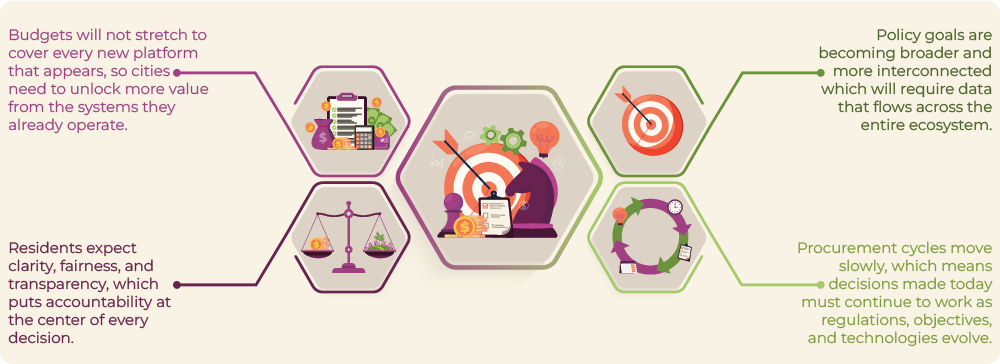
When cities invest in the future of their strategy, they gain the flexibility to introduce new capabilities gradually and deliberately. This avoids the trap of reactive modernization and ensures every upgrade contributes to long‑term, measurable improvement.
How to Future‑Proof Through Better Systems, Not More Tools
1. Treat AI and LPR as decision inputs, not products
AI and LPR now deliver higher quality reads and stronger analytics, but the real value comes from linking that intelligence to deployment models, compliance patterns, adjudication outcomes, and collections. This is how cities understand whether technology is truly improving turnover, safety, and fairness.
2. Make the digital curb executable, not theoretical
Cities are beginning to treat meters, signage, EV chargers, loading zones, time limits, and curb rules as assets that can be digitized. Futureproofing only works when those policies can be validated and enforced in real time across payments, permits, and analytics.
3. Address revenue leakage as a systems issue, not a collections issue
Revenue leakage is not a financial failure. It is a policy and systems problem that forms quietly across deployment, noticing, hearings, and collections. Cities that successfully reduce leakage look upstream at compliance probability, zone design, violation prioritization, and communication clarity.
4. Replace vendor-by-vendor optimization with portfolio-level governance
Vendors tend to optimize their individual products while cities are challenged to optimize their entire ecosystem. Without portfolio-level visibility using shared KPIs, unified dashboards, and cross system data, cities risk overinvesting in tools that do not improve overall outcomes.
5. Strengthen governance instead of expanding the tech stack
Cities that want to futureproof their operations focus on consistent ways of implementing, auditing and measuring policies. When these foundations are clear, it lowers procurement risk and it becomes easier to facilitate collaboration between vendors and ensure systems work well together.
How Trellint Can Help Future-Proof Your City's Parking Strategy
Future-proofing parking begins with stronger governance, clearer processes, and systems that work together. New tools rarely resolve misalignment. Cities that want lasting improvement focus on standardizing how policies are implemented, audited, and measured across every part of the operation.
Trellint helps cities build this foundation by unifying and interpreting data, strengthening accountability, and making existing technology deliver more value.
If your city is ready to modernize with confidence and reduce risk without expanding the tech stack, we would be happy to help. Get in touch to discuss how Trellint can support your next steps.