 Matt Darst

Parking and curb management programs rarely struggle because a single system doesn't work. They struggle because no one has the time, mandate, or bandwidth to own how all the systems work together.
A payment vendor records a transaction. A meter reports a status. An enforcement system issues a citation. A back-office platform sends a notice. Each step lives in a different system, often operated by different companies, under different contracts, with different definitions of success.
When everything aligns, the program feels efficient. When it doesn’t-which happens more often than not--cities are left reconciling outcomes after the fact. That burden almost always falls on city staff. And that’s the part of the conversation the industry rarely acknowledges.
City leaders responsible for parking and enforcement weren’t hired to manage complex integrations or arbitrate data conflicts between vendors. They’re managing budgets and procurement cycles, responding to press inquiries, training and retaining frontline staff, navigating labor agreements, briefing elected officials, meeting equity goals and keeping programs running under constant public scrutiny. The list goes on.
Even when talented technical staff are available, expecting a city department to actively govern a web of vendor integrations, rule engines, and data dependencies, on top of everything else, is unrealistic.
This isn’t a technology problem. It’s a capacity and ownership problem.
Complexity Already Exists, Whether We Acknowledge It or Not
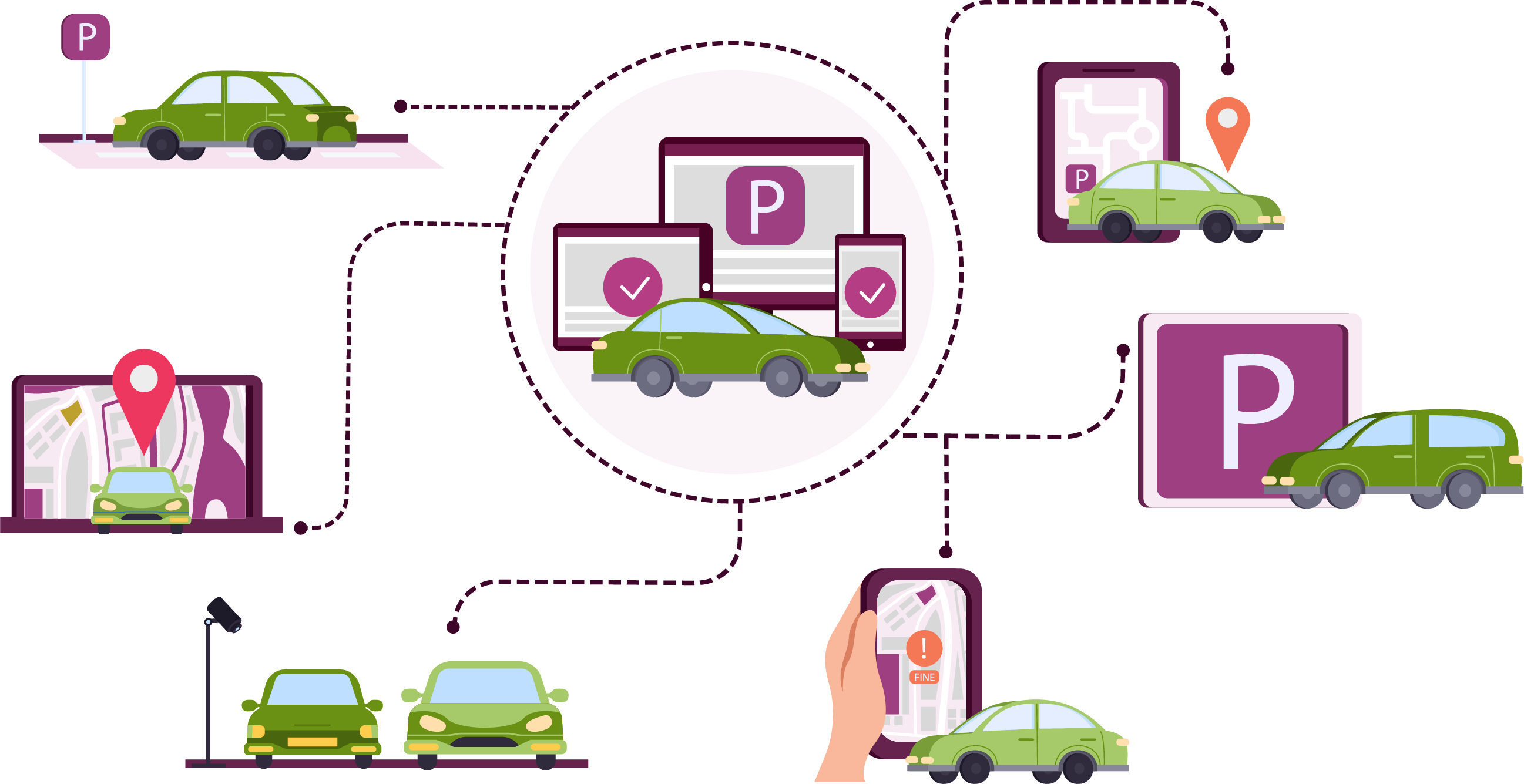
Parking systems don’t start simple and become complex over time. They are complex from day one.
Every decision depends on overlapping inputs: payments from multiple mobile providers, data from different meter manufacturers, license plate reads, sensor signals, permit rules, rate schedules, enforcement actions, performance management, and downstream legal and financial obligations. None of these operate in isolation. Each enforcement decision (e.g., whether a vehicle is parked in compliance, whether a citation is appropriate, whether escalation is justified) requires context across systems.
Cities don’t struggle because they lack tools. They struggle because no single system is responsible for turning all that activity into a coherent, defensible outcome.
When complexity is pushed to the edges, staff absorb it manually. Officers second-guess data in the field. Supervisors resolve conflicts after the fact. Finance teams reconcile discrepancies that shouldn’t exist. Over time, that friction becomes revenue leakage and operational and reputational risk.
Coordination Isn’t the Same as Accountability
The industry often responds to this reality by talking about “integration.” Systems talk to one another. Data flows between platforms. APIs are built. Dashboards are connected. That’s coordination.
Accountability is different. Accountable systems don’t just exchange data. They normalize inputs, apply policy consistently, and own the decision logic that determines outcomes.
A foundational platform doesn’t replace mobile payment vendors or meter manufacturers. It sits above them, establishing a single source of truth for assets, rules, eligibility, and enforcement decisions. It reconciles conflicts and records not just what happened, but also why.
That distinction matters most when programs are scrutinized: during audits, appeals, equity reviews, or public challenges. At that point, “the data came from another system” isn’t a defensible answer.
Where Standards Help and Where They Don’t
Industry standards like the Open Mobility Foundation (OMF), Curb Data Specification (CDS) and Alliance for Parking Data Standards (APDS) make it easier for systems to exchange data, reduce custom integration work and give cities more flexibility when procuring vendors. They are a meaningful step forward from fully proprietary interfaces.
But shared schemas don’t solve the underlying problem. Even when vendors use common data standards, someone still must decide how conflicting signals are resolved, which system is authoritative in each moment, how policy is applied consistently, and how outcomes are governed across the full lifecycle. Standards define how data is formatted and transmitted, not how decisions are made when that data disagrees, arrives late, or changes over time.
In practice, cities still end up managing edge cases, reconciling discrepancies, and explaining outcomes after the fact, just with potentially cleaner data structures.
A foundational platform doesn’t compete with standards. It absorbs them. It can use common schemas like OMF CDS or APDS where they exist and make sense, while still supporting existing data exchanges that cities and vendors already rely on. That flexibility reduces implementation risk, shortens timelines, and avoids forcing costly conversions simply to check a compliance box.
More importantly, it allows cities to modernize at their own pace, gaining the benefits of standardization and governance without disrupting systems that already work. Standards become a tool, not a gatekeeper, and integration supports accountability instead of shifting complexity back onto city staff.
Why Lifecycle Ownership Matters Downstream
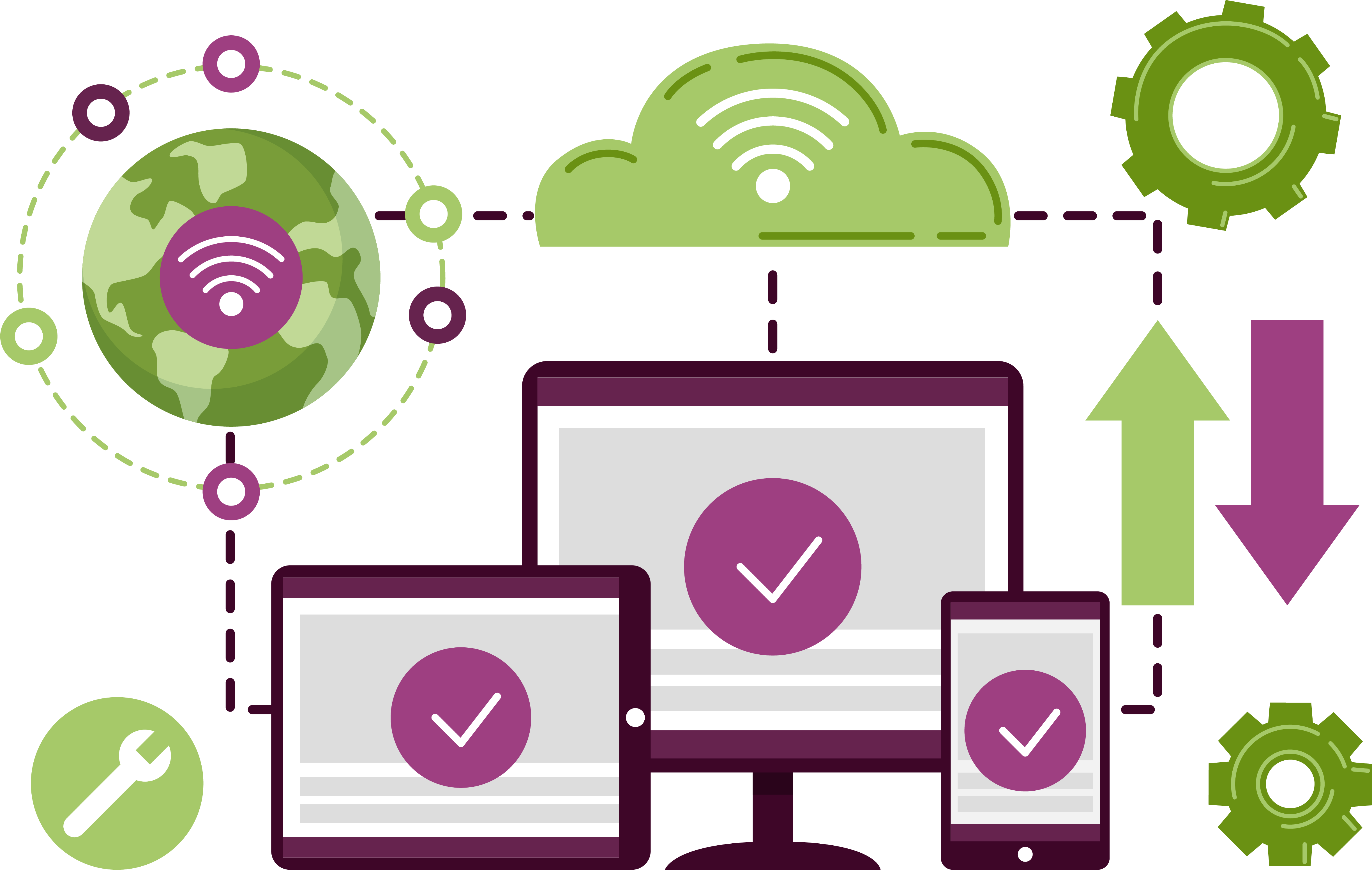
The real value of integration shows up later, often far from the curb.
When payment data, permit rights, and enforcement actions are governed centrally, notices go out correctly and on time. Appeals are resolved with full context. Financial posting aligns with what occurred in the field. Collections referrals are deliberate, policy-driven decisions, not automatic escalations. Stolen vehicle hits and law-enforcement alerts are handled with appropriate urgency and controls.
Just as importantly, outcomes feed back into the system, creating a loop for learning and improvement. Patterns emerge. Policies can be refined. Deployment decisions improve. The system learns and drives decision-making. That feedback loop doesn’t exist when each vendor only sees its own slice of the lifecycle. It only exists through centralized performance management.
What Do Cities Need to Succeed?
Most cities didn’t set out to assemble a patchwork of systems. It happened incrementally through procurements that solved individual problems without addressing the full enforcement and compliance lifecycle. The result is a program that technically functions, but is difficult to manage, hard to explain, and even harder to defend.
A foundational platform doesn’t simplify the world. It acknowledges its complexity and assumes responsibility for managing it. It gives cities a place where policy lives, decisions are made, and accountability is clear without requiring staff to become integration managers on top of everything else they already do.
Foundational platforms provide more than convenience. They provide unbiased governance. And in an environment where parking enforcement is increasingly tied to safety, equity, and public trust, governance is critical.
How can Trellint help?
Cities shouldn’t have to be system integrators to run effective parking and curbside programs.
Trellint takes on that role, owning the complexity, governing the integrations, and delivering outcomes cities can stand behind. From curb activity and enforcement decisions to adjudication, collections, and reporting, we operate the system as a whole.
If you’re ready to move beyond coordinating vendors and toward operating a program with clear accountability, speak to a member of our team today. We’d be happy to help you design a solution that simplifies complexity with your platform, strengthens governance and delivers results your city can trust.


-1.jpeg)