

Beyond the Feature List: What Public-Sector Parking Buyers Should Evaluate Now
As parking technology matures, feature lists matter less than architecture. Here's what agencies should really evaluate when choosing their next platform.

Parking is no longer just about finding a spot, it’s about managing curbside space efficiently, ensuring safety, and delivering a seamless experience for drivers and cities alike. As urban populations grow and mobility demands evolve, traditional parking technology struggles to keep up. Enter AI and automation, the game-changers that promise to transform curbside management into a smarter, data-driven ecosystem.
Cities today face mounting pressure to balance curbside access for delivery vehicles, ride-hailing services, micromobility solutions, and private cars while maintaining safety and compliance. Travel on US roads in 2024 has topped pre-pandemic levels as drivers log 3.28 trillion miles, setting a new record which is a testament to how vehicle usage and its impact on the curb has grown. In addition, manual enforcement and outdated systems often lead to congestion, inconsistent compliance, and frustrated communities. These inefficiencies ripple through urban life, causing delays, increasing emissions, and eroding public confidence in parking technology. Without innovation, these challenges will only intensify as curbside demand skyrockets.
This is where technology plays a vital role. Mobile apps, GPS tracking, Automatic License Plate Recognition (ALPR) cameras, and integrated mobility platforms provide cities with real-time visibility across curbside and parking networks.
But visibility alone isn’t enough. Just as public transport safety depends on trained staff and intelligent systems, effective parking management requires a balance of human judgment and automation. When AI and automation work together with human oversight, cities can create parking ecosystems that are trusted, inclusive, and future ready.
AI and automation have become essential because parking now intersects with far more than managing where vehicles stop. It shapes how confidently people navigate urban spaces, supports smooth mobility across multiple transport modes, and influences public perception of fairness and safety.

Automation delivers consistency and quick action on routine tasks, while AI interprets patterns, predicts emerging issues, and highlights risks before they grow. Together they give operators a clearer, more timely understanding of what’s happening at the curb, without removing the need for trained staff to bring context and discretion. When these technologies are designed and deployed responsibly, they form the foundation for safer, more reliable, and more equitable parking and curbside management.
The coming decade will usher in a new wave of mobility technologies designed to make streets safer, more intuitive, and more responsive to the needs of the people who use them. As cities rethink how curbside space should function, several AI- and automation-driven innovations are set to transform parking including:
Safety Aware Infrastructure
AI-powered systems can detect unusual patterns in parking lots or garages or across cities, such as unsafe congestion or adverse environmental conditions, and trigger timely alerts without crossing into surveillance overreach.
Just as transport apps integrate smart routing, parking technology will use automation to deliver gate-free, ticketless, app-enabled systems. These innovations boost convenience, enhance traceability, and eliminate inefficiencies.
Platforms that connect parking, public transport, micromobility, EV charging, and curbside management will provide cities with holistic oversight and deliver consistent, safe, and convenient experiences for the public.
AI-driven systems that model the impact of price changes, construction, or events on congestion, safety, and compliance. They give cities smarter tools to protect and serve their communities.
Tools like route monitoring, location sharing, and “check-in prompts” for irregular patterns should always prioritize user choice. Safety-focused technology must be opt-in, empowering, and non-invasive.
AI can assist with complex administrative processes such as adjudication and permit review by analyzing documents and summarizing data from multiple sources. This reduces repetitive manual work, speeds up decision-making, and ensures consistency.
Automation has the power to create a safer, fairer, and more consistent parking experience. When applied thoughtfully, it can transform curbside management by:
Yet technology alone isn’t a silver bullet. Its real value lies in data clarity and operational speed, which enable better human intervention and smarter decision-making. But with this capability comes responsibility.
As we integrate AI and automation, we must ensure systems empower rather than monitor. Responsible innovation demands vigilance in three critical areas:
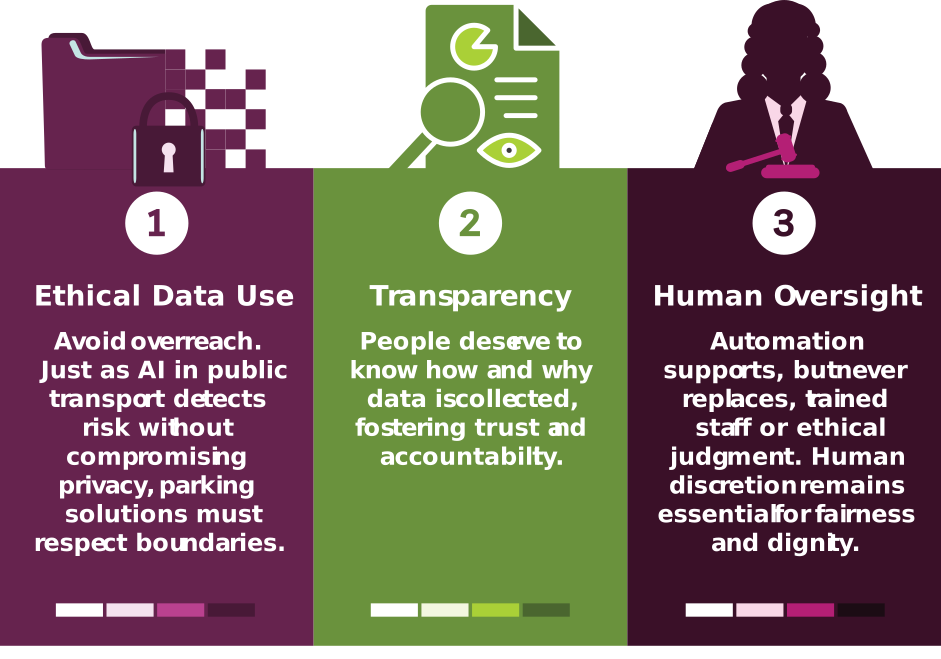
The goal isn’t just efficiency; it’s about building technology that enhances safety and trust while protecting the public’s right to autonomy. When automation and human responsibility work together, cities can create parking ecosystems that are proactive, inclusive, and future-ready.
At Trellint, we recognize that effective curbside management goes beyond allocating space. It’s rooted in trust, safety, and operational clarity. Get in touch with the Trellint team today to see how our AI and automation solutions can help create safer streets and fairer mobility systems.
Read the newest updates and insights from our team.
As parking technology matures, feature lists matter less than architecture. Here's what agencies should really evaluate when choosing their next platform.

As AI adoption grows across the parking industry, Gaurav Khanna from Trellint explores why success depends on building an AI-ready organization.

Discover key takeaways from Trellint's IPMI Virtual Learning Lab, where David Strathy-Miller and Sean Mackin discuss open ecosystems, modernization, and future-ready parking technology.

Evaluate parking citation collections bids with confidence. A practical guide to RFP requirements, vendor accountability, performance oversight, and revenue recovery.
Discover how predictive modeling, forecasting, and independent analysis help cities improve parking collections performance and revenue outcomes.
Discover how to manage a flexible, integrated ecosystem that delivers safer streets, better mobility, and long-term value.
Have a question or request? Let us know and we’ll follow up shortly.